
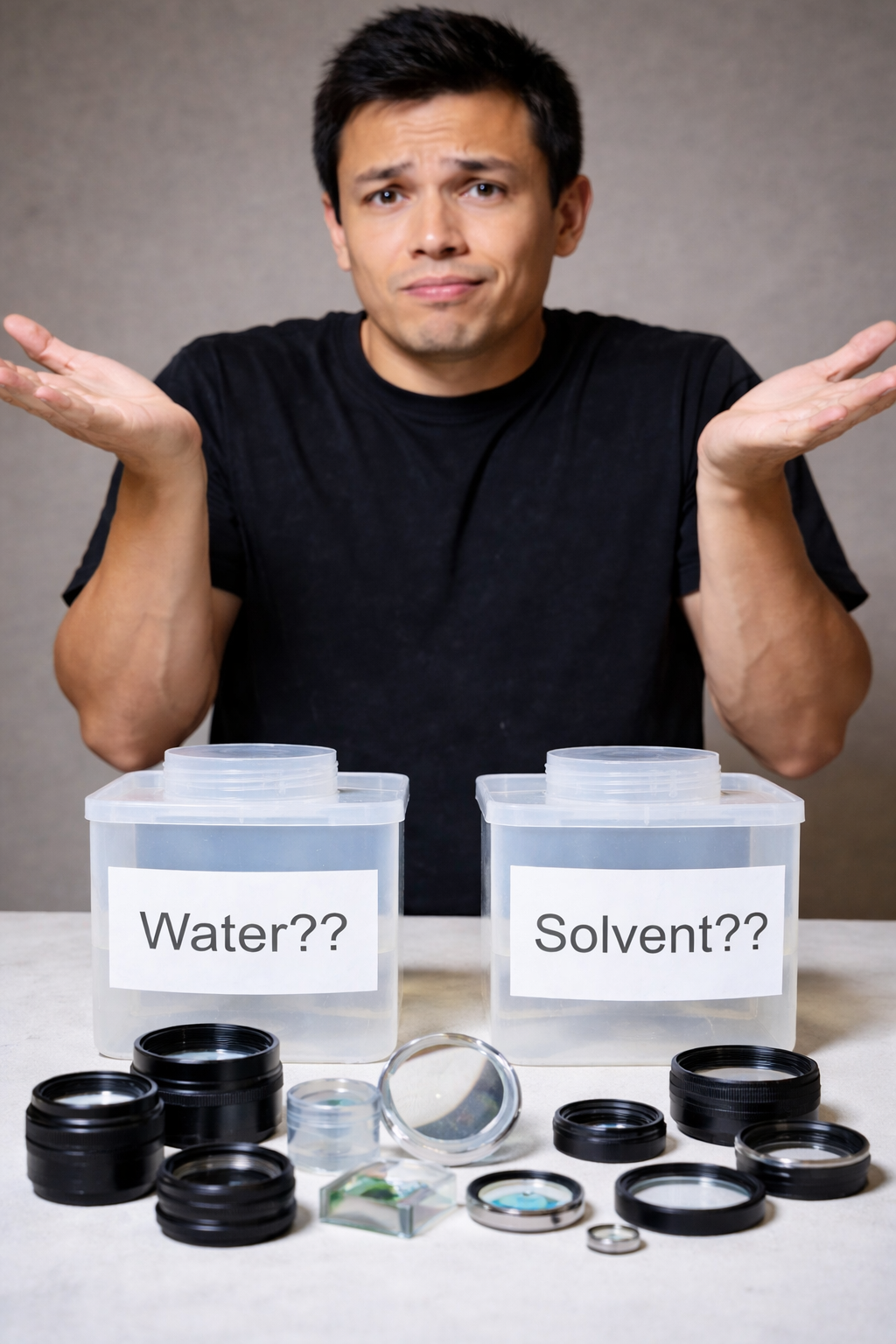
Water or Solvent? What If Neither Is the Best Choice for Precision Optics
What is the best method for cleaning precision optics? Traditional cleaning processes such as aqueous cleaning and solvent cleaning can remove oils and contaminants, but they often introduce challenges including residue formation, spotting, solvent disposal, and incomplete particulate removal. In this technical review, we evaluate water based cleaning, solvent cleaning, and CO₂ spray cleaning to determine which method produces the cleanest optical surfaces for high precision manufacturing.


Benefits of Automating the Vapor Blasting Process
Excerpt:
Automating the vapor blasting process offers significant benefits, including lower labor costs, improved efficiency, and consistent, high-quality results. With features like tumble conveyors using Archimedean screws, automation ensures a continuous flow of parts, reducing bottlenecks and maximizing throughput. Automated systems also enhance safety by limiting operator exposure to hazards and support scalability for growing production needs. This streamlined approach helps manufacturers save time, cut costs, and maintain reliability in every batch.

Vapor Blasting: A Clear and Effective Solution for Cleaning and Finishing Industrial Parts
Vapor blasting is an effective and gentle cleaning process for industrial parts, offering a smooth and uniform finish without causing surface damage. This wet blasting method combines water, abrasive media, and compressed air, making it ideal for cleaning and finishing parts like engine components, turbine blades, and molds. Popular in industries such as automotive, aerospace, and manufacturing, vapor blasting provides superior results by removing contaminants, rust, and paint while preventing corrosion. Its dust-free operation and ability to handle delicate surfaces make it a versatile solution for various materials.